
.svg)
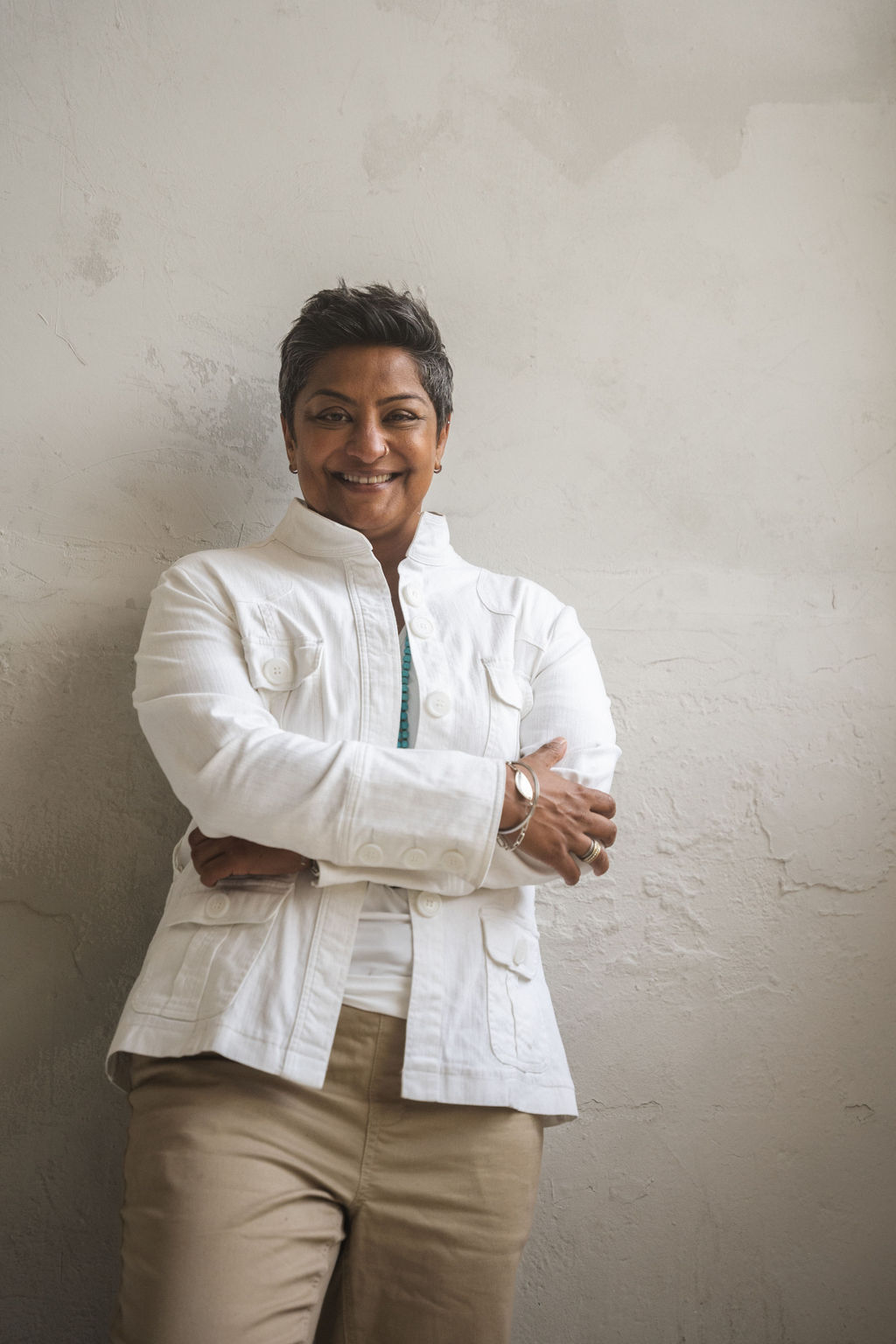
I realized recently that I've never actually told you where Kundalini Yoga comes from. Or how I ended up here, teaching it to you.
So let's fix that. Because the origin story matters, and maybe mine will mean something to you too.
Yoga Is Older Than History
Yoga itself is thousands and thousands of years old. Older than recorded history. We have depictions of people doing yoga before we had words to describe what they were doing. And underneath all of it is a simple understanding that has threaded through human civilization since the beginning: we are spiritual beings. We came to this planet as a drop of the Divine, here to have a human experience. And ever since we evolved into the beings we are now, we have needed that sacred connection.
Yoga, in all its forms, is one of the oldest technologies we have for keeping that connection alive.
The Roots of Kundalini Yoga
Kundalini Yoga has its roots in India, specifically in a region called the Punjab, part of what we now call South Asia. And to understand it, it helps to understand the broader landscape it came from.
That entire ancient region was rich with practices of consciousness: martial arts, dance, yoga, plant medicine, working with animals, working with the elements. Ancient knowledge, held and passed down by teachers who dedicated their entire lives to it. Teacher to student. Student becomes teacher. That teacher passes it on. And so on, for generations.
This is how wisdom traditions survive. Through relationship. Through devotion. Through lineage.
Over time, many of these traditions went underground. History has a way of doing that. Colonization, political suppression, economic instability, racism, war. The same forces that have shaped every era of human civilization pushed these practices into smaller and smaller circles. Sometimes only royalty had access. Sometimes only those born into specific lineages. The knowledge became sequestered, protected, hidden.
And then something shifted.
How Kundalini Yoga Came to the West
Starting in the early 20th century, and accelerating through the 1960s, teachers from India and South Asia began travelling West, bringing their wisdom traditions with them. Some came from a genuine desire to share. Some came for other reasons. All of it was complicated, as things always are.
Kundalini Yoga arrived in the West in the 1960s, brought by a teacher named Yogi Bhajan. He landed in Southern California at a time of enormous social upheaval: flower power, the hippie movement, widespread disillusionment with old systems, a hunger for something new. He found a ready audience.
I want to be honest with you about Yogi Bhajan, because I think candidness matters more than mythology. He was someone with an extraordinary grasp of these techniques and access to practices that had previously been kept very secret. He was also someone who abused that access. His legacy includes a documented history of harmful and predatory behaviour. He was not a significant part of my own education in Kundalini Yoga, and I won't spend much time on him here. What I will say is this: the practices themselves are not the person who carried them. What you'll find on this channel is my version, shaped by my own teachers, my own study, and my own life.
How I Got Here
Many years ago, in my early 30s, I was what I can only describe as dusted and busted.
I was emotional, in constant commotion, deeply unsure of myself. I'm Brown. I'm androgynous. I'm queer. And I didn't have a home inside of myself. I had been conditioned, as so many of us are, to believe that something about me was just not quite good enough. I acted out in all the ways that belief tends to produce. I had a good job. Good friends. A full life, on the surface. But something essential was missing.
I had always had a deep desire for something more: for art, for history, for spiritual connection. I just didn't know where to find it.
I found my way into yoga slowly, through people in my life who said come check this out. The first class happened because someone I'd just met said just try it, and because I thought she was pretty cool, I said okay. And then I went. And I liked it. And I didn't even fully understand why.
I kept going back. And back. And back.
Eventually, one of my teachers said to me: you need to take this more seriously. You ask good questions. You show up every time. You're clearly on fire for this. So I enrolled in a 500-hour Kundalini Yoga teacher training, three times a week, three weekends a month, for a full year. That was it. That's all I did.
I remember the first time I sat in a Kundalini Yoga class and tuned in. There were about fifteen of us in the room. We chanted the opening mantra together. I looked around. And something inside me shifted, a reckoning, a homecoming, that I can still feel to this day.
I Did Not Set Out to Become a Teacher
Let me be clear: I did not sign up for teacher training because I wanted to teach.
At the time, yoga had a reputation. Granola bars and incense. Hokey and fringe. Not something to be taken seriously. I was mortified by the idea of standing at the front of a room and teaching it.
But somewhere in that year of training, I started to see myself more clearly: the inherited patterns, the places I was slowing myself down, the trauma I'd carried without knowing it had a name. And I started to change. Slowly. Undeniably.
And then people started asking me to teach them.
I worked my nine-to-five and then taught from five-to-nine. I just loved it. It opened doors to people and experiences I never could have imagined. I went to India for six months. I studied laughter yoga. I went deep into the science of meditation, the science of the body, polyvagal theory. I trained as a counsellor. I discovered numerology, which is also woven into the Kundalini Yoga tradition, and watched it become one of the most profound tools in my practice.
A career I had never anticipated started to bloom right in front of me.
YouTube, the Pandemic, and What Came Next
About fifteen years ago, my next-door neighbour told me about this thing called YouTube and suggested I put some yoga videos there. So we went to a local park: my cousin Nadia (now a yoga therapist herself), a friend from Lululemon who sorted us out with white outfits, someone doing hair and makeup, and my neighbour behind the camera. We filmed something. I posted it and more or less forgot about it.
Then the pandemic happened.
And suddenly people had time to be still, and something about that stillness sent them searching. My YouTube videos started to take off in ways I hadn't expected. At the end of one video, almost as an afterthought, I said: if any of you want to get in touch, let me know where you're watching from. The next morning, my inbox was full.
That was the signal. I had been running a brick-and-mortar yoga studio, loving the community but feeling the weight of those hours. Long days, high overhead, a lot of different people and energy to hold. The pandemic made it clear that model wasn't sustainable. But something else was becoming possible.
I moved online. I brought my teacher training to Zoom. I leaned into the work I'd been doing around trauma, nervous system regulation, the intersection of Kundalini Yoga with PTSD, anxiety, depression, addiction. I started to see, more clearly than ever, that these practices weren't just good for wellness. They were medicine.
Why I Do This Work
I think part of my role in this lifetime, and I say this looking at my own numerology, is to make sure that this voice is heard. That you have an alternative you didn't know you had. That you have a place to come that actually feels safe.
Whether you're a person of colour, queer, someone who needs accessibility modifications, someone navigating trauma, or someone who just found a yoga video on YouTube one day and felt something they couldn't explain, I want you to feel at home here.
And I'll be honest: there is something that moves me deeply about that. Because in some quiet, important way, I think this work also honours the parts of my own bloodline that were silenced. The women in my family. Anyone who was hidden or suppressed or couldn't speak. When I stand at the front of a class, or show up in a video, or hold space in a training, I feel them with me.
So That's Kundalini Yoga.
Ancient. Lineage-based. Complicated in its journey West. Powerful beyond what I can adequately put into words.
And I am one teacher, shaped by many teachers: some of them brilliant, some of them difficult, all of them instructive in their own way.
If you want to go deeper, I would love to have you.
Join Harmony Within — my monthly Kundalini Yoga and meditation community for women and 2SLGBTQIA+ people in their reclamation. Or explore the Kundalini Yoga Training if you're feeling the call to go all the way in.
%20(1).jpg)


%201.svg)

